For nearly a year Bank Rate sat at 3.75%. On 5 November 2026 the Bank of England moved it up a quarter point, to 4%. It is the first rise since August 2023, and if you own a buy-to-let in Stoke-on-Trent or anywhere in Staffordshire, the question is simple: what does it do to your next mortgage?
The short answer: the rise itself is small, but lenders had already moved. Benchmark two-year mortgage rates rose by nearly half a point between the start of September and the decision. The real pressure point for landlords is the lender’s rent stress test at remortgage, not the monthly payment on a tracker.
Key points
- The Monetary Policy Committee voted 8 to 1 to raise Bank Rate to 4%. One member, Catherine L Mann, wanted 4.25%.
- CPI inflation was 3.5% in September 2026. The Bank expects it to reach around 5% by the middle of 2027, driven by energy prices.
- The effective rate on newly drawn mortgages was 4.63% in September 2026, against 4.03% on the outstanding stock.
- Buy-to-let lenders must stress-test at a minimum of 5.5%, or at least 2 points above the pay rate, for fixes shorter than five years.
Why did the Bank of England raise interest rates?
Energy. The Monetary Policy Summary for November 2026 (opens in a new tab) says the conflict in the Middle East is now in its ninth month and global energy prices “have continued to rise from an already elevated level.” UK CPI inflation rose to 3.5% in September, and the Bank now expects it to reach around 5% by the middle of next year before falling back.
The Bank has seen only “limited evidence” of that spreading into other prices and wages. So why move? In its words, “the degree of inflationary pressure in the pipeline is now sufficient to warrant an increase in Bank Rate.”
The tone is cautious. Alan Taylor called it a “one-for-now” insurance move and said “this is not the start of a hiking cycle.” We’d read that as: another rise is possible, not promised.

Will buy-to-let mortgage rates go up?
For most new borrowing, they already have. The Bank’s minutes say forward market rates stayed high and “continued to feed through to rates faced by some households and firms.” They add that benchmark two-year mortgage rates “had risen by nearly 50 basis points since the beginning of September,” well before the vote. Its own survey of market participants now has a median expectation of 4% in November and 4.25% in February.
The Bank’s Money and Credit figures for September 2026 (opens in a new tab) show where things stood just before the decision. They cover all mortgages, not just buy-to-let:
- The effective rate on newly drawn mortgages was 4.63%, up from 4.60% in August.
- The rate on the outstanding stock was 4.03%, up from 4.00%.
- Approvals for house purchase fell to 53,400, below the six-month average of around 58,800.
- Approvals for remortgaging with a different lender rose to 42,600, from 34,000 in August.
That gap between 4.03% and 4.63% is the number to watch. Anyone coming off an older, cheaper deal is likely to refinance higher. If your fix ends in 2027, you are in that queue. We covered what the approvals figures do and don’t tell you in our earlier look at mortgage approvals.
How does the rate rise affect the buy-to-let stress test?
This is where a quarter point can matter more than it looks. Under the Prudential Regulation Authority’s supervisory statement SS13/16 (opens in a new tab), lenders check that the rent covers the interest at a stressed rate, not just the rate you will actually pay. Three rules matter:
- Interest cover. The PRA notes that “the current industry standard is to set the minimum ICR threshold at 125%”, and that some lenders may set it higher. So rent must be at least 125% of the stressed interest.
- A 2-point buffer. Lenders must allow for “a minimum increase of 2 percentage points in buy-to-let mortgage interest rates”.
- A 5.5% floor. The lender “should assume a minimum borrower interest rate of 5.5%” over the first five years.
The look-ahead over five years does not have to be applied in the same way when the rate is fixed for five years or more. So a longer fix can let the same rent support a bigger loan. The PRA’s January 2026 update, which takes effect on 1 January 2027, keeps the same wording on these tests.
What does that mean for a terraced house in Stoke-on-Trent?
An illustration from official averages, not a lender quote. HM Land Registry’s UK House Price Index (opens in a new tab) puts the average terraced house in Stoke-on-Trent at £127,868 in August 2026. The ONS private rent data (opens in a new tab) puts the average terraced rent in the city at £726 a month in September 2026. Take a 75% interest-only loan of £95,901 and a 125% cover test:
| Stress rate used | Minimum monthly rent needed | Headroom against £726 |
|---|---|---|
| 5.5% (the floor) | £549 | £177 |
| 6.63% (a 4.63% pay rate plus 2 points) | £662 | £64 |
At the floor, the average Stoke terrace passes with room to spare. Once the pay rate climbs high enough that the 2-point buffer takes over, the headroom shrinks fast. Each extra quarter point on the pay rate adds about £25 a month to the rent this loan needs. A lender with a higher cover ratio, or a house letting below average, could fail it outright: then it’s a smaller loan, a longer fix or more cash in.
What does this mean for property prices in Staffordshire?
Prices here were flat to modest before the rise. The UK House Price Index for August 2026 shows Stoke-on-Trent at an average of £150,112, down 0.2% on a year. Staffordshire county averaged £251,119, up 2.7%, and the West Midlands £250,731, up 1.2%. Rents, meanwhile, kept climbing: the average Stoke-on-Trent rent rose 5.1% in the year to September 2026, to £718 a month.
The Bank notes that new mortgage approvals have been falling. With low borrowing, flat prices and rising rents are a fair starting point. With high borrowing, the stress test is the constraint, not the price.
What should Staffordshire landlords do now?
- Find your fix end date. Note the month each mortgage ends and its rate. Anything ending in 2027 or sooner goes first.
- Run the stress test yourself. Take your loan, apply 5.5% or your likely new rate plus 2 points, whichever is higher, and multiply the interest by 1.25. If the rent doesn’t cover it, you know early.
- Ask about a five-year fix. Under SS13/16 a fix of five years or more is treated differently in the stress test. It may let the same rent support the same loan.
- Check the rent is at market level. The stress test runs on the rent, so compare yours with the ONS figures and follow the Renters’ Rights Act rules on increases. Our Renters’ Rights Act guide covers them.
- Talk to a broker months before the fix ends. Remortgage approvals are rising, so start early.
- Diarise 17 December. That is the next Bank Rate decision. Own through a company, or thinking of it? Our structure guide covers the tax side.
Questions landlords are asking
What is the Bank of England base rate now?
4%, from 5 November 2026. The Monetary Policy Committee voted 8 to 1 to raise it by 0.25 percentage points from 3.75%. The next decision is due on 17 December 2026.
Will interest rates go up again?
Possibly, but it is not decided. The Bank says policy is not on a pre-set path. Its survey of market participants had a median expectation of 4.25% in February 2027, and one Committee member voted for 4.25% now.
Does the rate rise affect my fixed-rate buy-to-let mortgage?
Not until the fix ends. Your payment stays the same for the fixed period. It matters at remortgage, through the new rate and the rent stress test.
What is the buy-to-let stress test rate?
Under the PRA’s SS13/16, lenders assume at least 5.5%, or at least 2 points above the pay rate, over the first five years. The rent usually has to cover 125% of the interest at that rate. Fixes of five years or more are treated differently.
If you’d like a second pair of eyes on a remortgage or a purchase, our hands-free service runs these numbers street by street before we recommend anything. Ask us a question, or see what we’re sourcing now at Invest Now. For how investors recycle capital through refinancing, see our BRRR guide.
A quarter point is a small move. The stress test is where you’ll feel it.
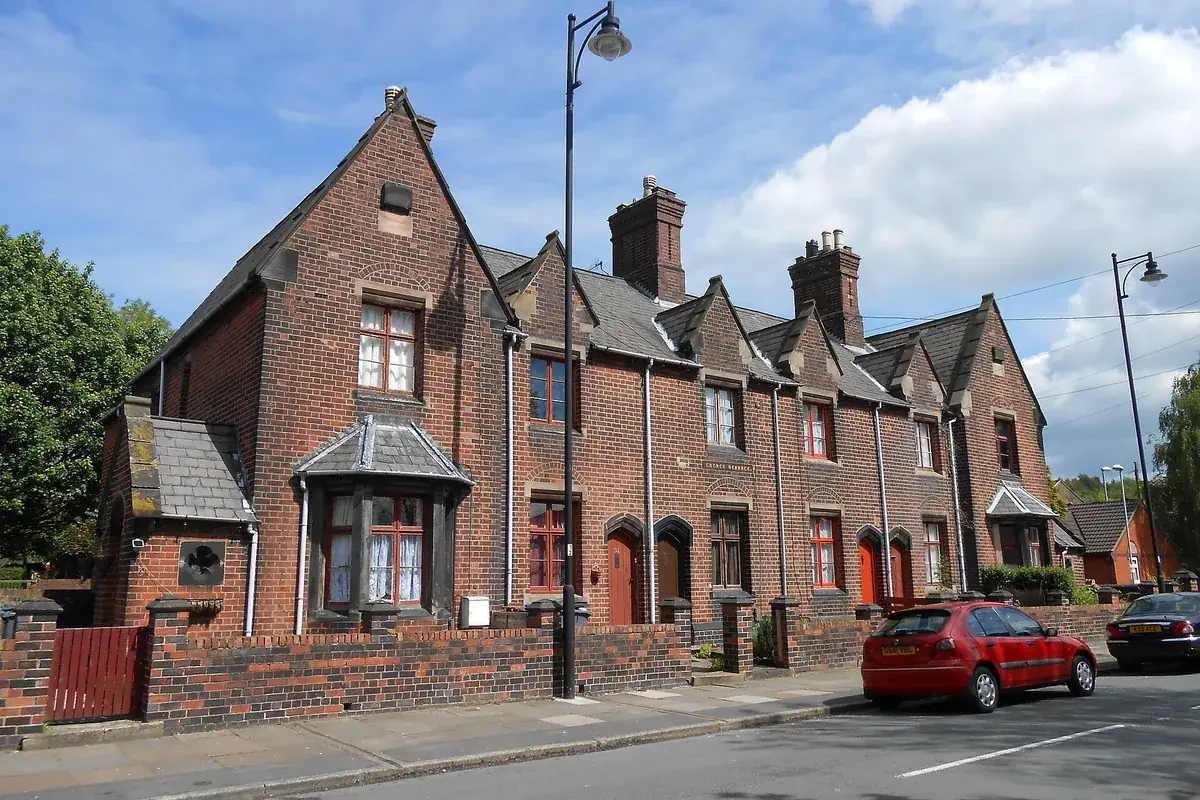
Figures are from the Bank of England (5 November and 29 October 2026), the PRA’s SS13/16, HM Land Registry’s UK House Price Index and the ONS release of 21 October 2026, checked on 5 November 2026. The stress-test table is an illustration using official averages, not a lender’s figure. The cover photo shows Wellesley Street in Shelton, Stoke-on-Trent, by Roger Kidd (Geograph via Wikimedia Commons (opens in a new tab), CC BY-SA 2.0, cropped). This article is general information, not financial or legal advice.