Property News · Hands-Free Property Investment
UK Unemployment Falls to 4.7%: What It Means for Staffordshire Property Investors
On 20 October the Office for National Statistics announced that UK unemployment had fallen to 4.7%. Sky News carried it as breaking news, and the number is right. It just isn’t the number that matters most if you own a rental in Staffordshire, or are thinking about buying one.
The short answer: unemployment fell slightly across the UK, rose across the West Midlands, and the local picture in Stoke-on-Trent and Staffordshire is mixed. Rents here are still climbing faster than pay. For investors, that is a reason to be careful about affordability, not a reason to sit out.
Key points
- UK unemployment was 4.7% in June to August 2026, down 0.1 percentage points on the quarter and on the year.
- The West Midlands went the other way: 5.7%, up 0.5 points on the quarter, the largest quarterly rise of any UK region.
- Stoke-on-Trent’s claimant rate was 5.3% in September 2026, lower than a year earlier. Staffordshire county’s was 2.8%, slightly higher.
- Private rents rose 5.1% in Stoke-on-Trent and between 6.3% and 7.6% in most Staffordshire districts, against UK pay growth of 3.7%.
Is the 4.7% figure right?
Yes. The ONS Labour Market Overview (opens in a new tab) puts the unemployment rate for people aged 16 and over at 4.7% for June to August 2026. The previous month’s release, covering May to July, said 4.9%, which is where the “fall” in the headlines comes from.
Look a little closer, though. Those two figures cover overlapping months. The ONS’s own comparison, with the previous three months, shows a fall of just 0.1 percentage points. The ONS also asks people to be careful with short-term moves, because its Labour Force Survey still has smaller samples than it used to. So the honest reading is a small improvement, not a turning point.
The rest of the release is softer. Vacancies fell to 691,000 in July to September; outside the pandemic, there have not been so few since 2014. Payrolled employees were down 111,000 on the year. Regular pay grew 3.7%, or 0.6% after inflation (CPIH). Fewer people out of work, fewer jobs being advertised, and pay only just ahead of prices. That is a cooling jobs market, not a hot one.
What happened to unemployment in the West Midlands?
It rose. The ONS regional figures (opens in a new tab) put the West Midlands at 5.7% for June to August 2026, up 0.5 points on the quarter. No region saw a bigger quarterly rise. London had the highest rate, at 6.6%. The regional employment rate slipped to 72.5%.
Regional survey samples are small, so one quarter is not a trend. The year-on-year figure is actually down 0.5 points. But when the national headline says “falling” and your own region says “rising”, it is worth knowing which one your tenants live in.
What is the claimant count in Stoke-on-Trent and Staffordshire?
The claimant count measures people claiming unemployment-related benefits. It is published for every council area, so it is the best local gauge we have. For September 2026, from ONS data on NOMIS (opens in a new tab):

- Stoke-on-Trent: 9,030 claimants, 5.3% of working-age residents. That is down from 9,330 (5.5%) a year earlier, but up from 8,865 in August.
- Staffordshire county: 15,430 claimants, 2.8%. Up from 14,790 (2.7%) a year earlier.
- The districts range from 2.2% in Staffordshire Moorlands to 3.3% in Tamworth, all below the UK rate of 3.9%.
Two places, two stories. The county is one of the steadier job markets in the region. The city carries a claimant rate close to the West Midlands average and is more exposed to single-employer news. In September, bet365 said it would cut about 340 roles, around 300 of them at its Stoke-on-Trent headquarters (opens in a new tab), starting with voluntary redundancies. On the other side of the ledger, Staffordshire County Council points to projects such as Chatterley Park, which it says could create up to 1,700 jobs (opens in a new tab). Those are projections, not jobs yet, and we read them that way.
Are rents in Staffordshire still rising?
Yes, and faster than pay. The latest ONS rent figures (opens in a new tab), for the 12 months to September 2026, show:

| Area | Average monthly rent | Change on a year |
|---|---|---|
| United Kingdom | £1,406 | +3.8% |
| West Midlands | £983 | +4.4% |
| Stoke-on-Trent | £718 | +5.1% |
| Newcastle-under-Lyme | £837 | +7.0% |
| Stafford | £902 | +6.5% |
| Cannock Chase | £868 | +7.2% |
| Staffordshire Moorlands | £732 | +7.6% |
| Tamworth | £930 | +0.4% |
At £718 a month, Stoke-on-Trent is still far below the England average of £1,466. Its growth has also cooled: a year ago, rents in the city were rising at 10.4%. Tamworth is the outlier at 0.4%, after rising 6.1% the year before.
Here is the tension. Rents in most of the county are rising at nearly twice the pace of pay. That can’t run forever. When it stops, it usually shows up first as tenants staying put, asking for longer to pay, or falling behind, rather than as falling rents.
What does this mean for property investors in Staffordshire?
Demand is not the problem. Stoke-on-Trent rents are still rising, and every Staffordshire district except Tamworth is up more than 6%. The question has moved from “will it let?” to “can the tenant keep paying?” That changes how we’d buy.
How to buy well in a cooling jobs market
- Underwrite today’s rent, not next year’s. If a deal only works with another 6% rise, it doesn’t work.
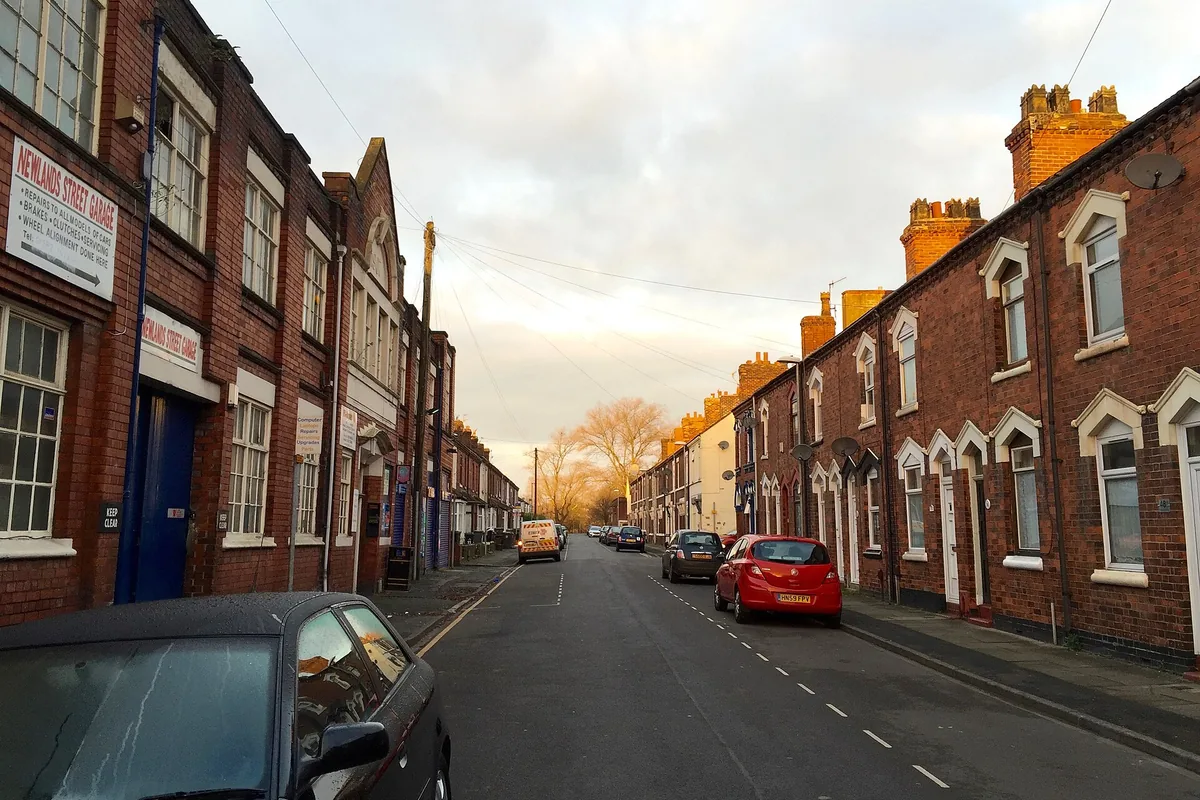
- Check affordability for the actual street. Compare the rent with what local tenants earn, not with the area average. A £718 average in Stoke-on-Trent hides very different streets.
- Price in a longer void and a slower payer. Under the Renters’ Rights Act, the mandatory arrears ground now needs three months of arrears, so a buffer matters more than it did. Our Renters’ Rights Act guide covers the rules.
- Follow the employers, not the headlines. Look at who is hiring within a commute of the property, and treat any announced scheme as a projection until it opens.
- Diarise the next two data points. The Bank of England decides on Bank Rate (now 3.75%) on 5 November. The next ONS jobs figures come out on 17 November.
This is the local reading we do before recommending any purchase through our hands-free service: rent, wages and employers, street by street. National figures start the conversation. Local ones finish it.
Questions investors are asking
What is the UK unemployment rate now?
4.7% for June to August 2026, according to the ONS release of 20 October 2026. That is down 0.1 percentage points on both the previous quarter and the year. The next figures are due on 17 November 2026.
What is the unemployment rate in the West Midlands?
5.7% for June to August 2026, up 0.5 percentage points on the quarter and down 0.5 points on the year. It was the largest quarterly rise of any UK region.
How many people claim unemployment benefits in Stoke-on-Trent?
9,030 people in September 2026, 5.3% of residents aged 16 to 64. A year earlier it was 9,330, or 5.5%. Across Staffordshire county the figure was 15,430, or 2.8%.
Does rising unemployment mean lower rents?
Not straight away. Rents depend on supply as well as jobs, and the supply of rental homes is still tight. Pressure on tenants’ incomes tends to show first in arrears and in tenants staying longer, so investors should test affordability before they buy.
How much is rent in Stoke-on-Trent?
The ONS puts the average private rent in Stoke-on-Trent at £718 a month in September 2026, up 5.1% on a year earlier. The West Midlands average was £983.
Is Staffordshire still a good place to invest in property?
The fundamentals are mixed but workable: low entry prices, rents rising faster than the national average, and a county claimant rate below the UK’s. The risk to manage is tenant affordability, so the deal has to work at today’s rent with a buffer.
If you’d like to talk through what these figures mean for a particular street or budget, ask us a question, or see what we’re sourcing now at Invest Now. For more on reading rent data, see Three Rental Indices, Three Different Numbers.
4.7% is a good headline. The investors who do well here will be the ones who read the next line down.
Figures are from the ONS releases of 20 and 21 October 2026 and the Bank of England, checked on 1 November 2026. The cover photo shows the bottle kilns at the Albion Works, Longton, by Brian Deegan (Geograph via Wikimedia Commons (opens in a new tab), CC BY-SA 2.0, cropped). This article is general information, not financial or legal advice.